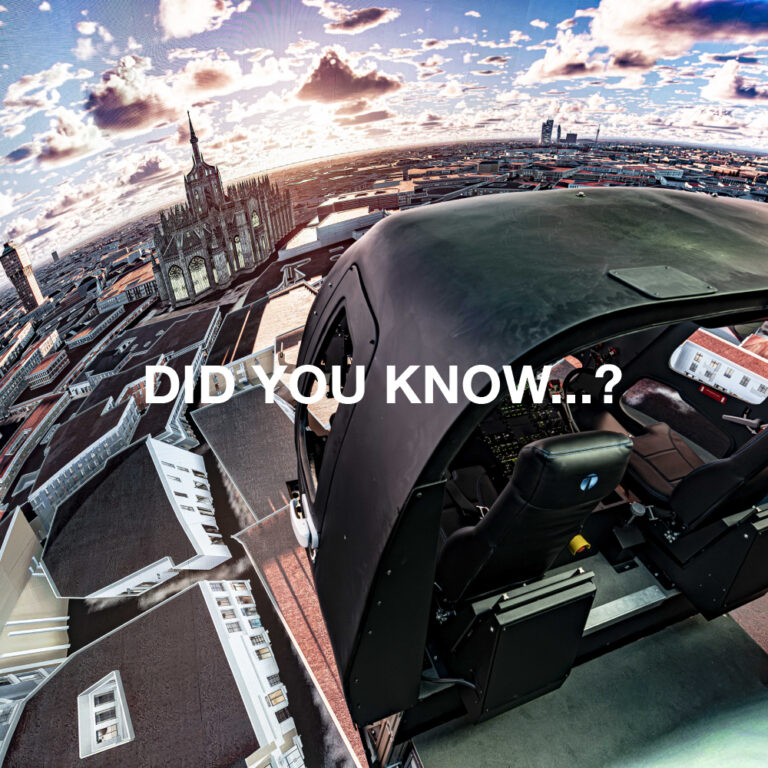
Night Vision Goggles (NVG) have become an essential tool for modern helicopter operations, especially in missions performed under low-light conditions such as Search and Rescue (SAR), HEMS, offshore operations, law enforcement, or military deployments.
NVG operations require a specific adaptation to visual perception, environmental scanning, and reference interpretation during night flight. At entrol, our focus is to recreate these operational challenges as realistically as possible through advanced NVIS simulation technologies.
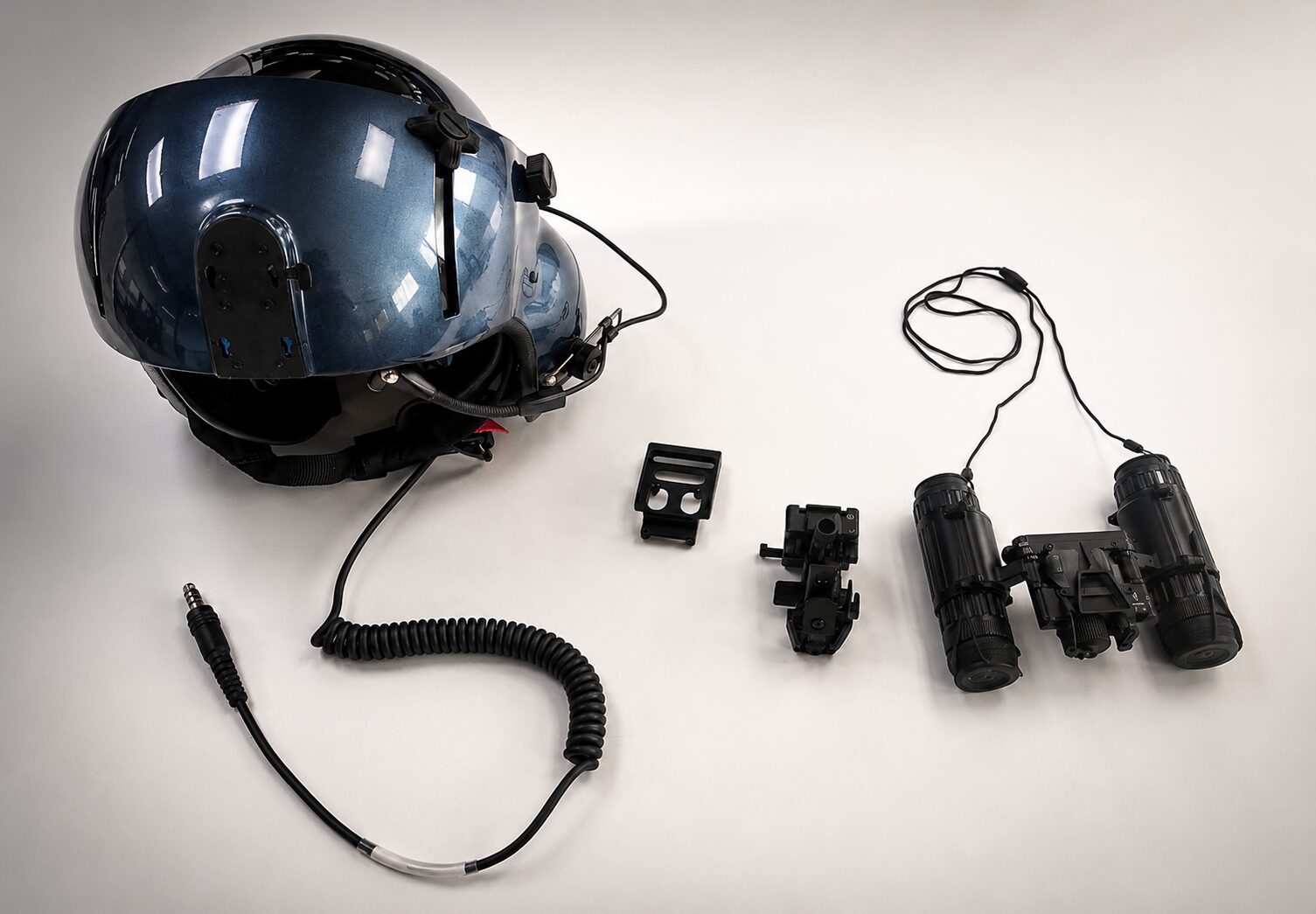
Flying with limited visual perception
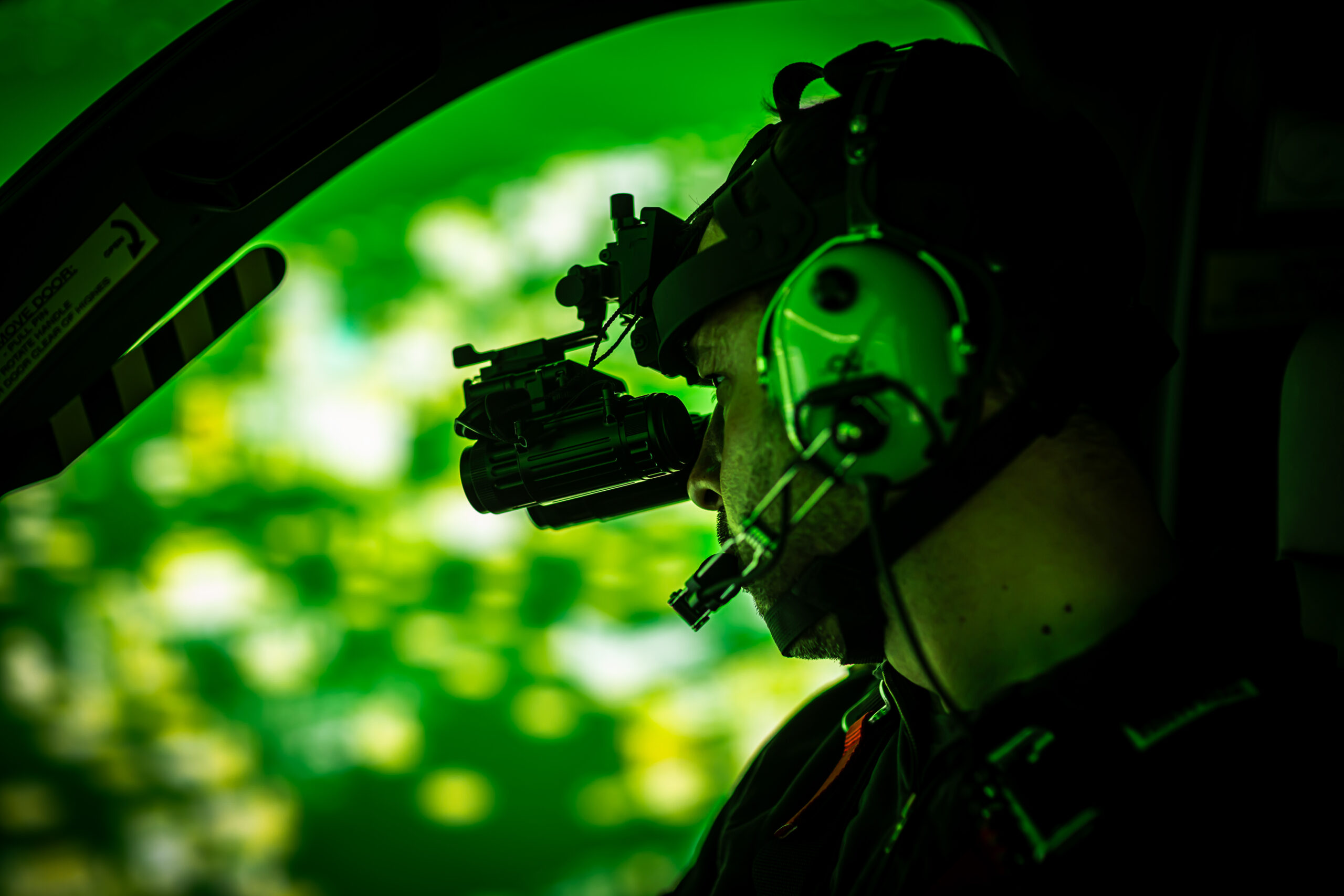
Operating with NVGs completely changes the way pilots perceive their environment. Unlike natural vision, NVGs amplify visible light and part of the infrared spectrum, completely altering the pilot’s visual perception
The complexity of NVG operations is defined by several critical visual limitations:
- Reduced Field of View (FOV): while human vision naturally provides a wide panoramic perception, NVGs typically reduce the pilot’s field of view to approximately 40 degrees, creating a “tunnel vision” effect.
- Green effect and altered visual perception: traditional NVGs generate a monochromatic green image that changes how pilots perceive terrain, obstacles, and light sources. Artificial lights generate halo effects, shadows become deeper, and surfaces such as water may appear completely black under low ambient lighting conditions.
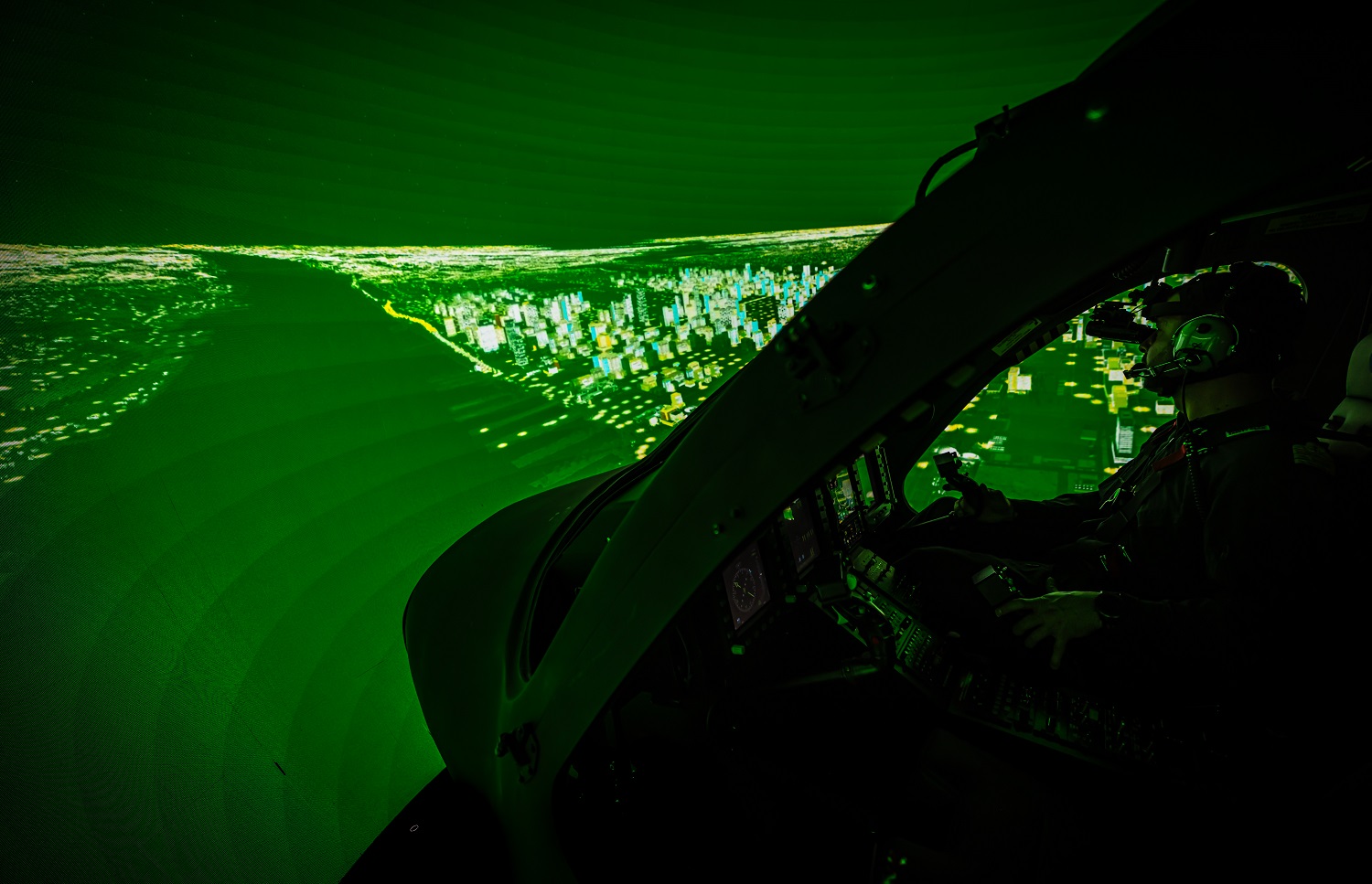
The need for specific NVG training
Because NVGs significantly alter visual perception, pilots require specific training before conducting real night operations.
Part of this training focuses on adapting to the weight and ergonomics of the goggles, as well as learning the so-called instrument scan, a technique that allows pilots to monitor cockpit instruments using peripheral vision outside the NVGs.
At entrol, we consider these operational habits a fundamental part of realistic NVG flight training, as they play a key role during complex night operations.
In addition, understanding how factors such as moon phases, clouds, rain, snow, or artificial lights affect night vision is essential for safe operations.
Night operations: high-risk, high-complexity environments
NVG operations are commonly performed in high-complexity helicopter operations such as SAR, HEMS, offshore operations, law enforcement missions, or tactical deployments, where crews must operate with minimal visual references and constantly changing environments.
These helicopter operations may take place over open sea, mountainous terrain, confined areas, or environments without artificial lighting, where factors such as weather conditions, rain, snow, fog, or changing lighting conditions directly affect visual perception.
For this reason, preparation and training in realistic scenarios are essential for safe night operations.
Why simulation is essential for NVG training
Simulation has become one of the most effective tools for NVG flight training, helping operators complement FAA and EASA night operation training requirements while recreating conditions that are difficult, expensive, or unsafe to reproduce during real flights.
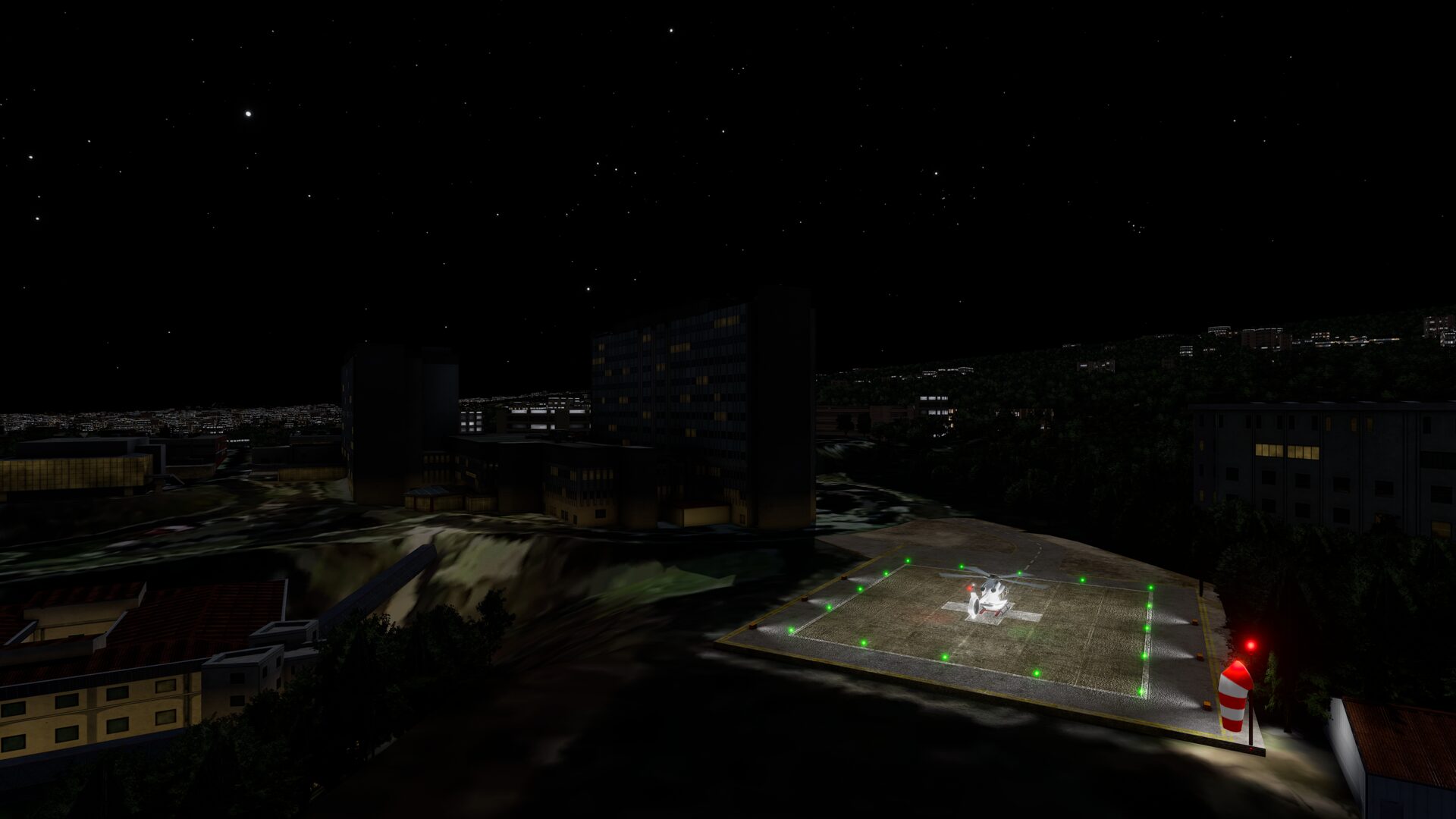
Training beyond the limitations of real flight
Simulation allows NVG operations to be trained in a more flexible, safe, and efficient way.
- On-demand recreation of different night and environmental conditions
- Safe training for emergencies and high-risk operational scenarios
- Reduced operational costs and increased training availability
Progressive learning: from adaptation to mission readiness
NVG training programs aligned with FAA and EASA operational standards must follow a progressive process
Pilots first learn how to operate with a reduced field of view, properly adjust the NVGs, and use techniques such as the instrument scan. Training then evolves into advanced scenarios such as SAR, offshore, HEMS, or tactical missions, recreating visual conditions such as fog, rain, halo lights, or different lighting environments.
This approach helps crews prepare for the visual and operational complexity of real night flight scenarios.
Entrol’s NVIS technology
At entrol, our NVIS solutions are designed to recreate realistic night environments by combining dedicated NVIS databases, advanced visual technologies, and real GEN III NVG goggles.
The goal is to allow crews to train under the same visual limitations, operational references, and flight conditions they will encounter during real SAR, HEMS, offshore, or deployment operations.
High-fidelity mission-oriented NVIS environments
entrol’s NVIS databases are specifically developed to recreate complex night flight environments with a high level of visual and operational realism.
Scenarios include advanced effects such as:
- Halo lights in cities, runways, and helipads
- Rain, snow, and fog
- Water and surface reflectivity
- Lighting variations depending on moon phases and time of day
- Dynamic shadows and unlit areas
- IR and environmental effects specific to night operations
The system also reproduces characteristic effects of real NVGs, such as light halo effects, the behavior of dark surfaces without ambient illumination, vegetation reflectivity caused by chlorophyll interaction, or increased visibility under certain fog conditions.
Envision and advanced Image Generator technology
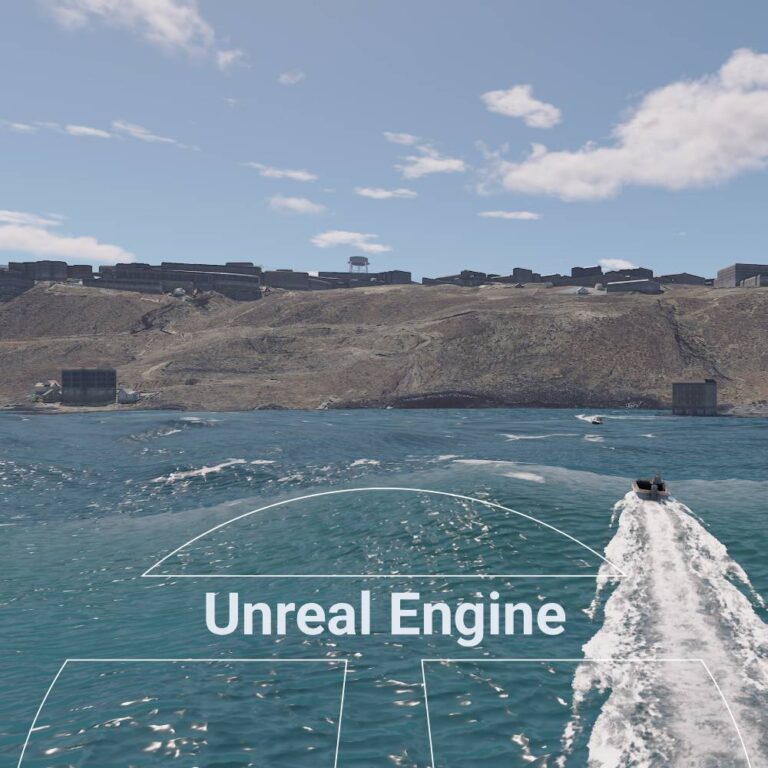
To enhance visual realism during NVG training, entrol integrates its Envision visual system together with advanced Image Generator technology based on Unreal Engine 5.
These systems allow the replication of multiple NVG-specific visual effects and mission-oriented night environments, including halo lights, fog conditions, rain effects, water reflectivity, and different ambient illumination conditions.
Combined with dedicated NVIS databases and real GEN III goggles, these technologies help recreate realistic night flight simulation scenarios for SAR, HEMS, offshore, or deployment operations.
Advanced NVG simulation in LED environments
Unlike traditional projection systems, LED technology offers higher resolution, contrast, and visual quality during night operations.
However, integrating real NVG training into LED environments represents a technological challenge, since current LED displays do not emit infrared light natively.
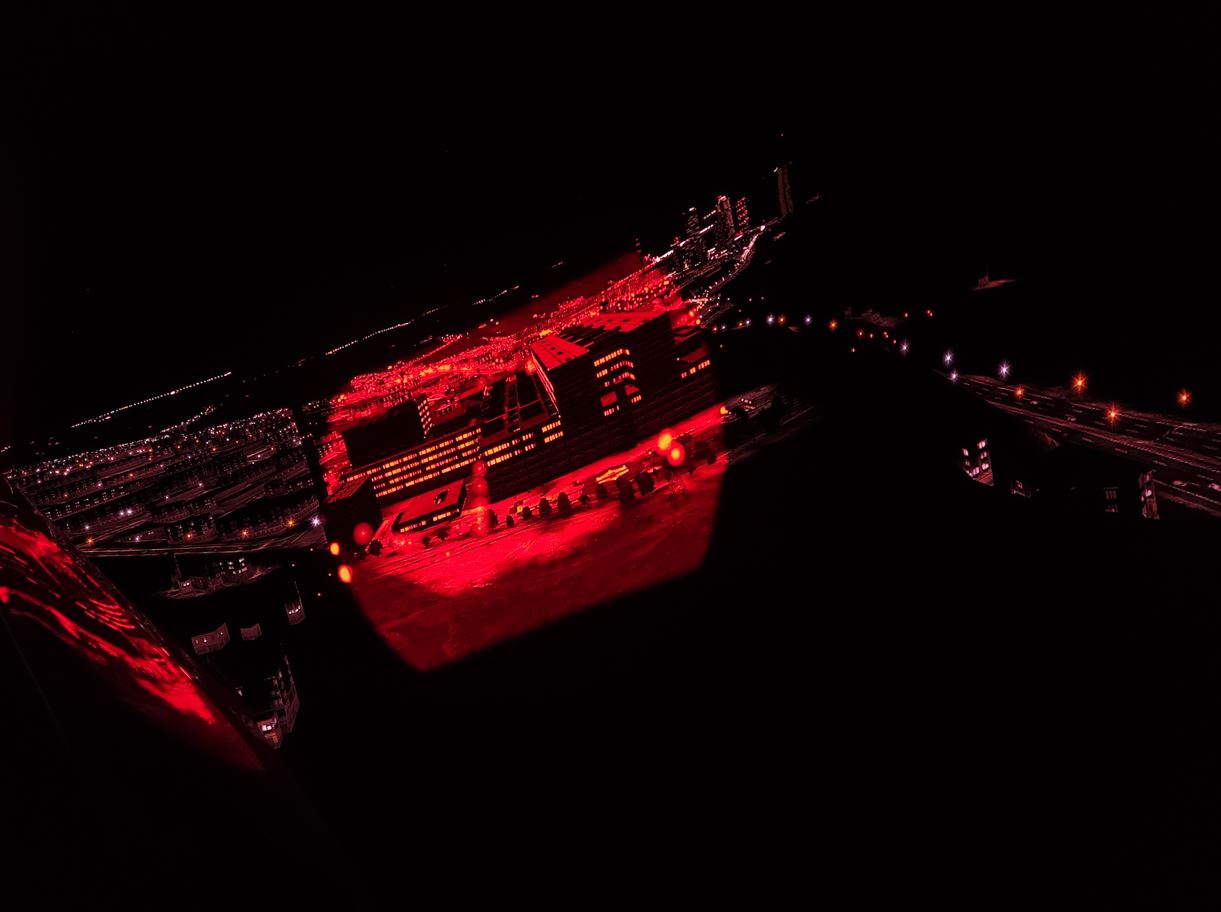
To overcome this limitation, entrol has developed a specific system capable of dynamically recreating NVG visual effects within the pilot’s field of view. Thanks to head tracking integration, the system generates a visual area synchronized with the pilot’s head movements, realistically reproducing the characteristic effects of night vision while the peripheral environment remains darkened.
This solution makes it possible to maintain the visual advantages of LED systems while replicating the operational behavior of real NVGs.